
Turn a datasheetinto a tested board.
Cresyte is an AI that plans the tests from your datasheet, runs the supply, load, meter and scope on your bench, and writes the report. It asks before it turns anything on.
Testing a board takes all afternoon.
Set the supply, step the load, read the meter, write it down. Then do it all again for every board and every revision. None of it is hard, all of it is slow, and one wrong setting can cost you the board.
Cresyte does the slow part. You make the calls.
Datasheet in, report out, in three steps.
The same steps you would take yourself, in the same order, with every one written down.
Step 1
Give it the datasheet.
It reads the electrical characteristics and writes the test plan. Every limit comes from a line in the datasheet, and you can change any of it.
Step 2
Wire up your bench.
It lists every wire in the order you connect it. Then it asks before it turns anything on.
Step 3
It runs the tests. You get the report.
It drives your supply, load, meter and scope, writes down every reading, and hands you a report: pass, fail or not measured, with the numbers.
When a test fails, it finds out why.
It goes back to the bench, measures closely around the failure, and looks for the one cause behind the failed tests. The report says what it found.
- Output voltage Accuracy, 0 to 2 AFail
- Load Regulation, 0 to 2 AFail
- Output ripple at 2 A, 20 MHz bandwidthFail
The report's finding
The three failures are one underlying defect, not three independent ones.
It measured again, closer together, around the failure, and the other tests on the same wiring passed, which rules out the bench.
A run on a simulated board, 8 September 2026, with a fault built in on purpose: the output sags above 1.5 A.
On 9 simulated boards, 1 healthy and 8 with a fault built in on purpose, it found every fault (0 missed) and raised nothing on the healthy one. It never went past a board's limits, and left every bench safe. 12 September 2026.
It can't hurt your board.
These limits are built into the product's code. The AI can't turn them off.
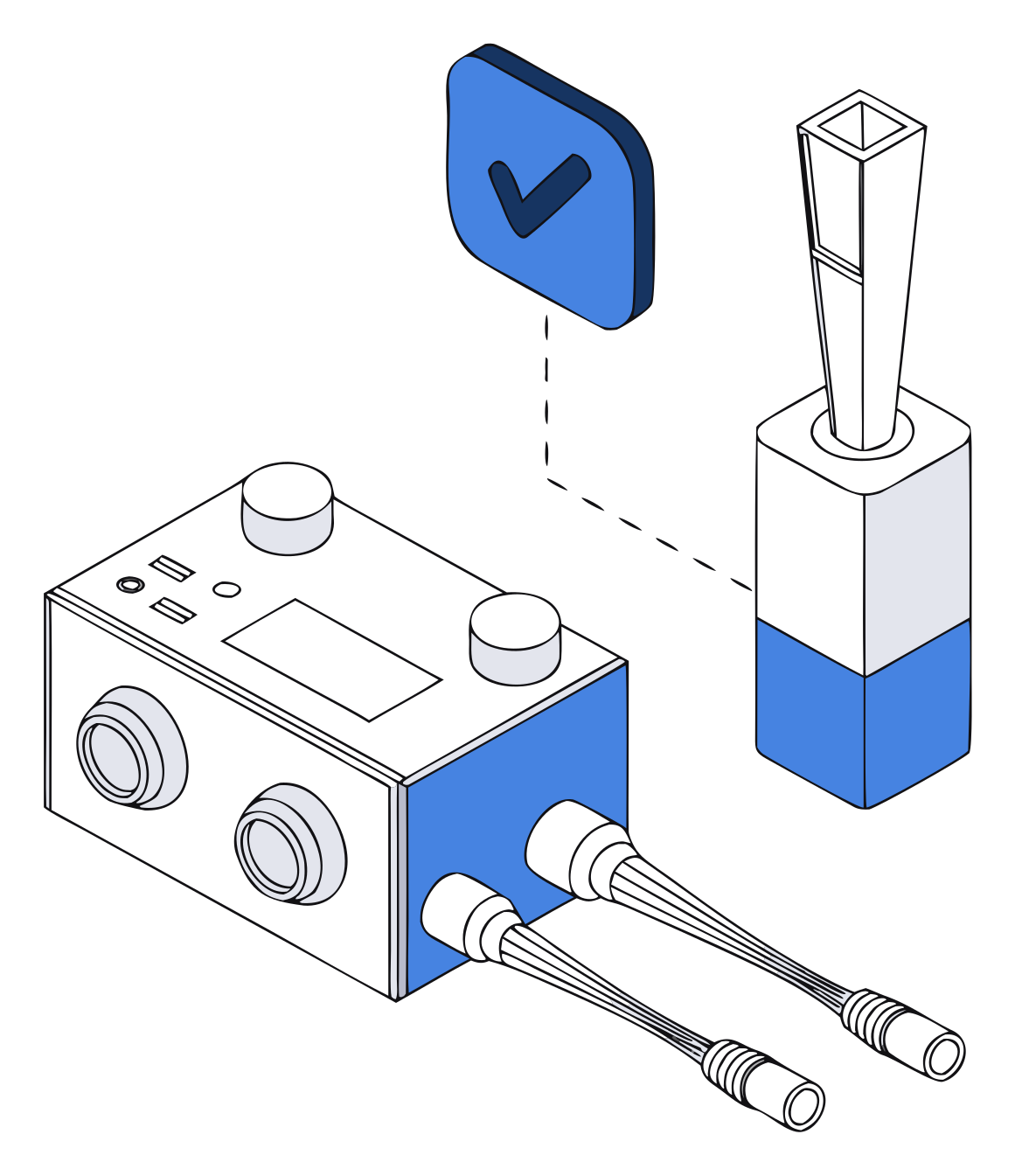
It asks before it turns anything on.
Approve each step that powers the board, or approve the whole run once.
See it wait
It never goes past your board's limits.
The maximum ratings in your datasheet are enforced in code. A setting above them is refused before it reaches the instrument.
It never makes up a number.
If it can't measure something reliably, the report says so, and why.
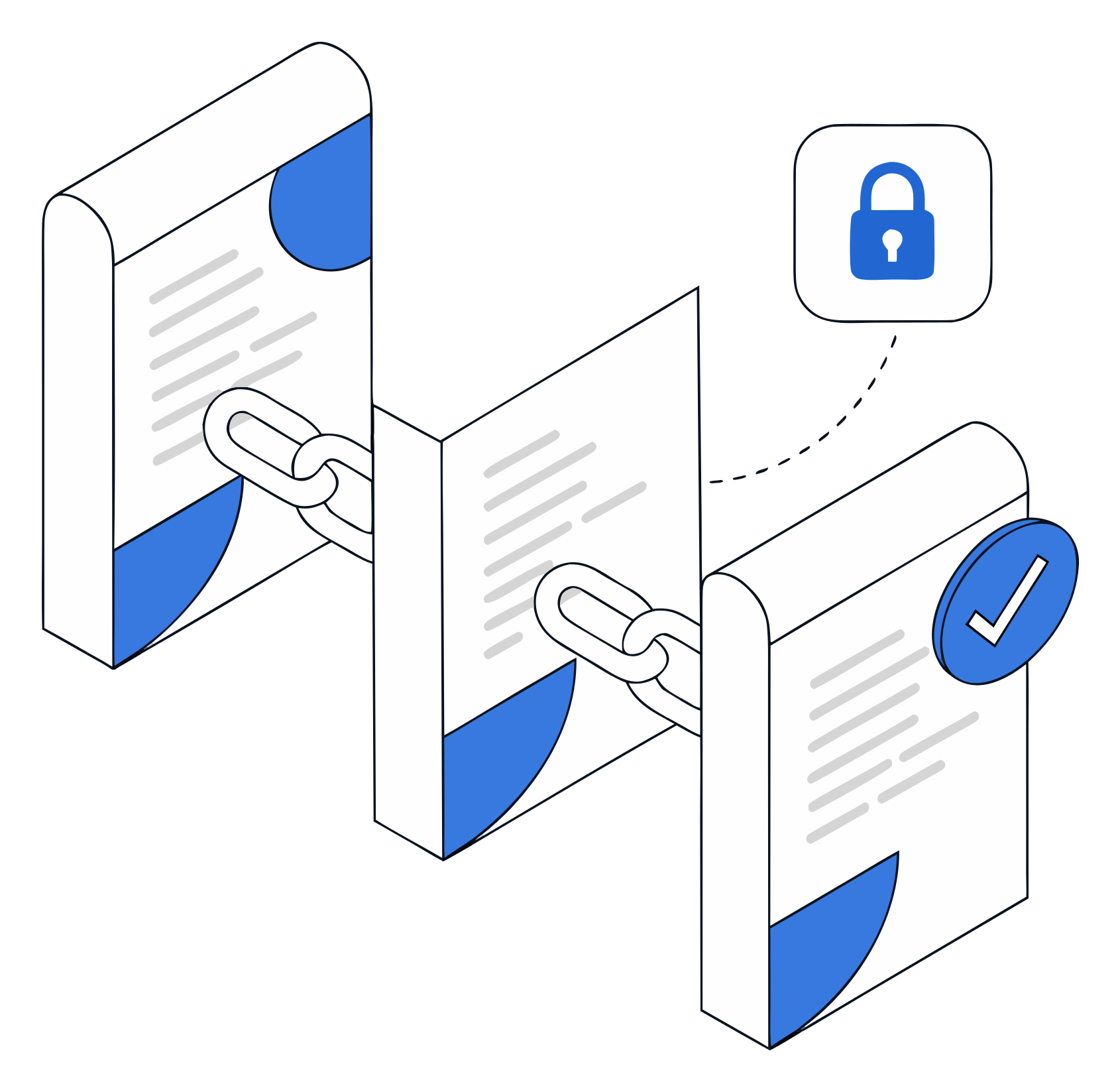
It never changes the record.
Every step is written down as it happens, each one sealed to the one before. Change one and the record shows it.
Try to change one
Try to fake a result.
Every step of a run is written down as it happens, and each entry carries a seal made from the one before it, like links in a chain. Your browser is checking every seal right now. Make the failed test pass and see what happens.
What this proves: nothing was changed, removed or added after it was written.
What it doesn't: someone who controls the computer could rewrite the whole file. Keeping a copy of the record somewhere else is next.
Checking the seals…
Checked in your browser
Works with the instruments you already have.
A supply, an electronic load, a multimeter and a scope, connected to your computer over LAN or USB. No new box to buy.
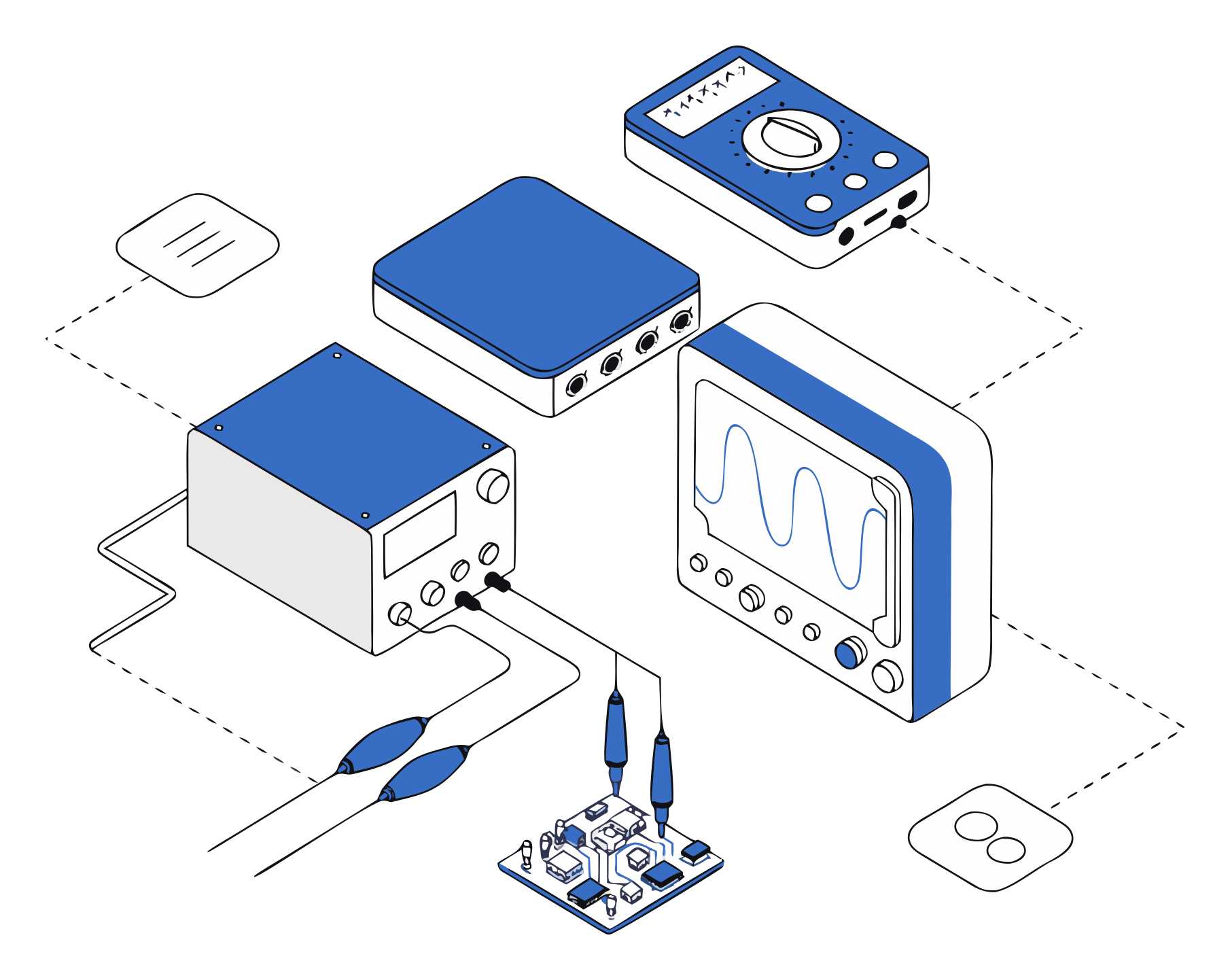
The bench from the recorded run, wired in the order Cresyte lists.
- Rigol DP800SupplyTested in software
- Rigol DL3000LoadTested in software
- Rigol DM3000MultimeterTested in software
- Rigol DS1000ZOscilloscopeTested in software
- Keysight E36300SupplyNot run yet
- Keysight DSOX1000OscilloscopeNot run yet
- Keithley 2230SupplyNot run yet
- Siglent SPDSupplyNot run yet
- B&K Precision 9130SupplyNot run yet
- Aim-TTi LD400LoadNot run yet
None of these has run on real hardware yet. Tested in software means a run drove a software copy of that instrument, over a real network connection.
Don't see yours? Tell us when you join the waitlist. That's how we choose the next one. Join the waitlist
Join the waitlist.
Cresyte is pre-launch. Leave your email and we'll write when you can run it on your own bench.
What engineers ask first.
Could it damage my board?
It can't turn anything on until you approve, and the maximum ratings from your datasheet are enforced in code the AI can't change: a setting above them is refused before it reaches the instrument. Stop is one click and leaves the bench safe, and if the software stops, a watchdog turns the outputs off. So far this is proven on the simulated bench, not yet on real instruments.
Does it replace a test engineer?
No. It does the settings, the readings and the tables. You decide what the board needs, approve what touches it, and judge what the results mean.
Can it run while I'm away?
Approve the whole run once and it won't ask again; the limits still hold on every step. Every wait has a time limit, so it never leaves a board powered and unattended for long.
What if the datasheet is wrong, or missing a limit?
It only uses limits the datasheet gives, and never invents one. You can change any limit, and the change is kept on the record with your reason.
What leaves my computer?
Instrument traffic stays on your computer, and plans, runs and reports are plain files there. The planning, and the look into a failure, go to the AI model provider.
Which instruments does it work with?
Supplies, electronic loads, multimeters and scopes that take SCPI commands, over LAN or USB. The table above shows each one and how far it has got. Tell us yours.
What doesn't it measure yet?
Load transient, loop response and thermal. Today it measures output voltage, load and line regulation, ripple, efficiency, UVLO and the over-current trip.
What does checking the record prove?
That nothing in the run's record was changed, removed or added after it was written. It doesn't stop someone who controls the computer from rewriting the whole file; keeping a copy of the record elsewhere is next.
What will it cost?
It isn't priced yet. The waitlist hears first.